WIP Reporting: How Contractors Prevent Profit Fade
WIP Reporting: How Contractors Prevent Profit Fade
Intro:
Profit fade is one of the most painful and expensive problems in construction. A job that looked profitable during the first few weeks suddenly finishes with thin—or even negative—margins. This happens because most contractors rely on month-end reporting, outdated spreadsheets, or inconsistent job costing practices that don’t show what’s actually happening inside a project until it’s too late.
WIP reporting (Work In Progress) is the solution, and it’s one of the strongest levers a contractor can pull to protect margins, stabilize cash flow, and keep projects on track.
What WIP Reporting Really Shows
WIP reporting gives you a real-time snapshot of each job’s health. It tracks:
Percent complete
Costs incurred to date
Projected final cost
Earned revenue
Overbilling and underbilling
Profit-to-date and projected profit at completion
Rather than relying on your gut—or a spreadsheet buried in someone’s laptop—WIP reporting gives you the truth about every job, every week.
This is critical because construction has more moving parts than almost any other service business: labor, subs, materials, equipment, delays, change orders, weather, and inspections. WIP reporting cuts through the noise and shows contractors exactly where they stand.
Why Contractors Experience Profit Fade
Profit fade is not random—it happens for predictable reasons:
1. Labor is mis-coded or over budget
Labor is one of the biggest costs on any job. If hours aren’t tracked or coded correctly, managers don’t realize how far off the job is until the end.
2. Subcontractors exceed estimates
Subs often bill more than expected due to delays, scope adjustments, or poor coordination. Without WIP, it goes unnoticed.
3. Material costs spike mid-project
Prices change, backorders force substitutions, and field purchases go untracked.
4. Change orders are not captured or billed
A missing change order is one of the fastest ways to lose profit on an otherwise healthy project.
5. Projects fall behind schedule
Every delay costs money—especially when labor or equipment is on standby.
6. Financials are updated too late
If accounting doesn’t sync to operations, profitability becomes a guess.
WIP reporting exposes these issues before they become margin-killers.
The Percent-Complete Method Explained
The percent-complete method is the foundation of WIP reporting. It compares actual cost to budgeted cost to determine how far along a job truly is.
Formula:
Percent Complete = Actual Costs ÷ Budgeted Costs
This allows contractors to calculate:
Earned revenue
Overbilling or underbilling
True profit-to-date
For example:
If you’ve spent 40% of the budget but only billed 25%, you’re underbilled—a cash flow risk.
If you’ve billed 60% but only completed 40%, you’re overbilled—a revenue recognition issue that could mask a margin problem.
Without percent-complete accuracy, contractors fly blind.
Dashboards Beat Spreadsheets Every Time
Spreadsheet WIP reports fail for three reasons:
They aren’t updated daily
They rely on manual data entry
They don’t tie directly into QBO or job costing
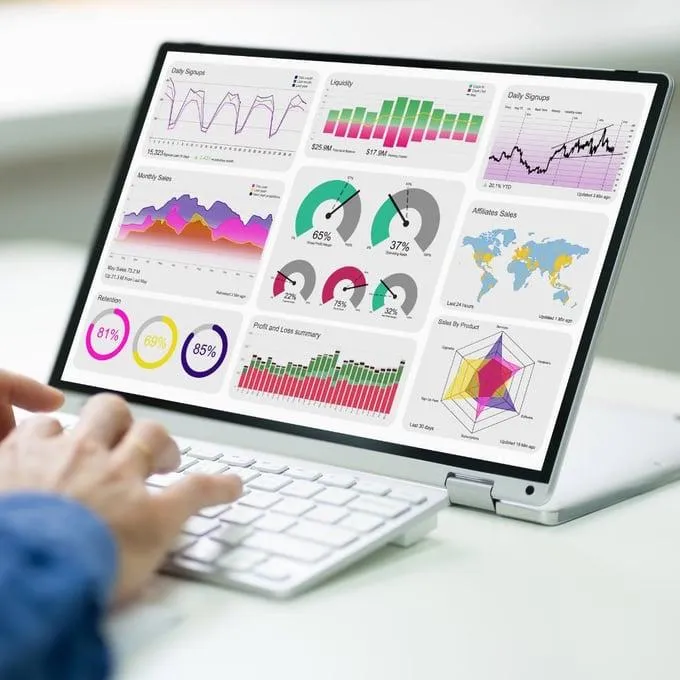
A real-time WIP dashboard solves all of this:
Updates automatically
Reflects cash flow, labor, and materials in real time
Displays job profitability instantly
Flags issues early
Shows overbilling/underbilling
Connects directly to Projects in QBO
Contractors using dashboards have faster decision-making, fewer surprises, and far stronger margins.
Real-World Wins From Better WIP Visibility
Contractors who adopt WIP reporting typically see:
Higher profit margins (5–15% improvement)
Reduced labor overruns
Cleaner AR and faster collections
Better scheduling decisions
More accurate bidding on new projects
Less stress and fewer surprises
WIP isn’t a report—it’s a competitive advantage.
Conclusion
WIP reporting is no longer optional for contractors who want to scale. It is the single most important financial tool for protecting margins, spotting problems early, and keeping projects on track.
When you understand percent-complete, over/under billing, committed costs, and projected final profit, you finally have full control over your operations. You stop relying on outdated month-end reports and start making decisions based on real-time job performance.
Most bookkeeping firms can reconcile bank accounts, but very few can build a construction-grade WIP system that ties job costing, budgets, forecasting, progress billing, and dashboards together. That’s where Salisbury Bookkeeping stands apart.
We build WIP reporting systems that deliver:
Accurate percent-complete visibility
True profitability by job, phase, and trade
Clear cash-flow projections for upcoming projects
Real-time dashboards that eliminate blind spots
Consistent weekly updates—not month-end surprises
With the right WIP system, you’ll never wonder if a job is profitable again—you’ll know. And that knowledge is what drives predictable growth, stronger margins, and long-term stability for every contractor serious about running a professional, scalable construction business.


