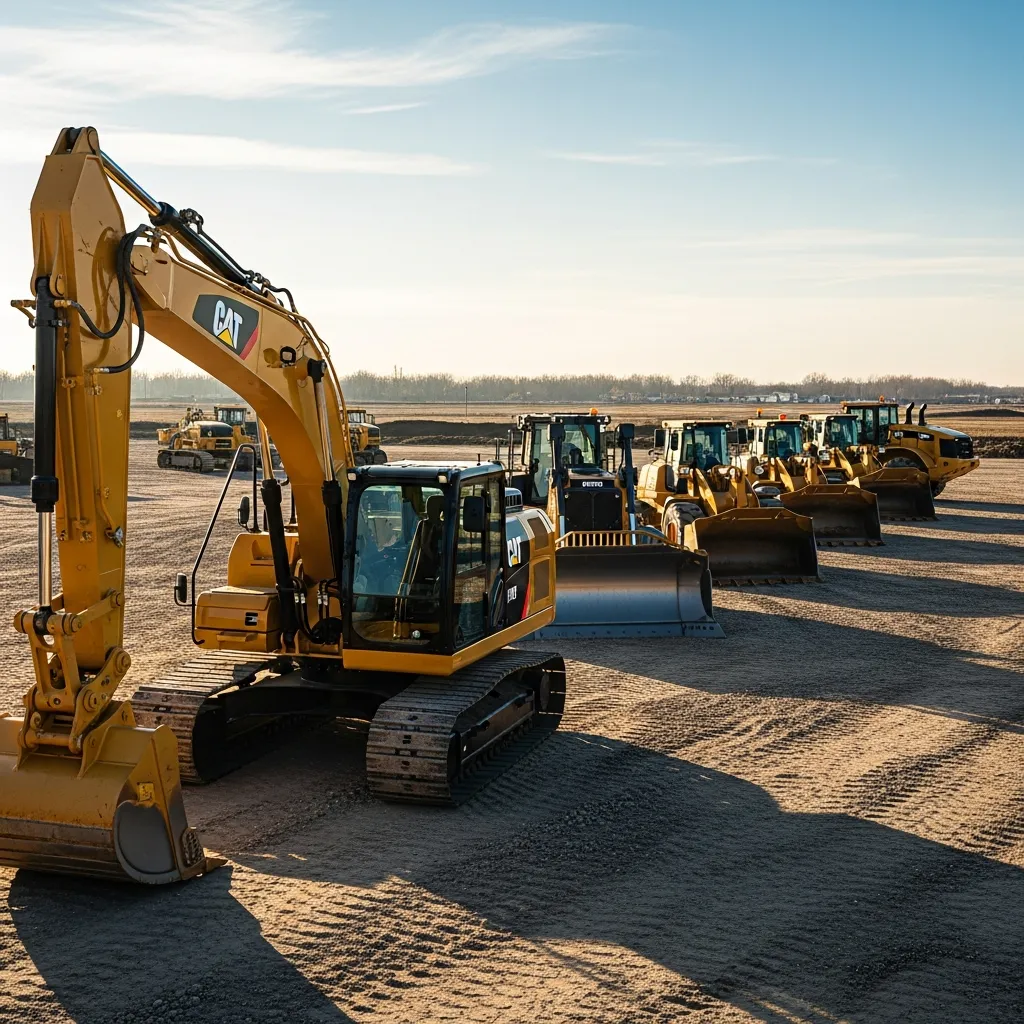
What Equipment Tracking Means for Your Bottom Line in 2026
Why Equipment Tracking Is a Financial System Issue, Not Just an Operations Problem
In 2026, the construction industry is buzzing about smarter equipment tracking—think IoT sensors, GPS telematics, and real-time dashboards that tell you exactly where your excavator is sitting (probably idle on a job two towns over when you needed it yesterday). But here is the thing: most contractors treat equipment tracking as a field operations problem. They buy the fancy software, slap the tags on their machines, and call it a day.
That is a mistake.
Equipment tracking is a financial clarity issue. If you are not connecting your equipment data to your job costing and financial dashboard, you are still flying blind—and hemorrhaging cash in ways you cannot see. Let's talk about how to turn equipment tracking into a profit-protection system that actually moves the needle on your bottom line.
The Hidden Profit Killers Lurking in Your Equipment Fleet
For custom home builders, remodelers, and commercial GCs managing fleets ranging from a handful of trailers to dozens of heavy machines, the chaos is real. You know the pain points:
- Phantom utilization: You think your skid steer is working five days a week. Your data says it sat idle for 60% of billable hours last month.
- Untracked maintenance bleed: That compressor you have been nursing along? It has cost you $4,200 in reactive repairs this year when a $1,800 replacement would have paid for itself by March.
- Job cost amnesia: You moved a mini-ex between three jobs last week. Did you allocate those equipment hours correctly in QuickBooks? Do you even know what your true internal rental rate should be?
- The 'borrowed' equipment black hole: Your lead carpenter swears he returned the laser level. It is been on a side job for six weeks. You are renting a backup unit at $80/day.
These are not operations problems. These are profit leaks—and they are almost impossible to see without a financial system that ties your equipment reality to your P&L reality.
What a True Equipment Financial System Looks Like
Here is the shift: stop thinking about equipment tracking as a 'where is my stuff' tool. Start thinking about it as a critical node in your financial system—the same system that connects your project management software (Buildertrend, CoConstruct, Procore) to your accounting backbone (QuickBooks) and your live financial dashboard.
The Three Pillars of Equipment Financial Clarity
1. Real-Time Job Costing Integration
Your equipment hours need to flow directly into job costing. Not manually. Not at month-end when your bookkeeper is playing archaeologist with crumpled fuel receipts. In real time. That means:
- Every hour your backhoe runs gets tagged to a specific job code and cost center
- Your internal rental rates (calculated based on true ownership cost, depreciation, maintenance, and utilization) get applied automatically
- You can see, at a glance, whether that complicated site-work job is profitable or whether equipment overruns are quietly killing your margin
2. Maintenance Cost Tracking That Talks to Your Dashboard
Maintenance is not just a line item—it is a leading indicator of fleet health and a make-or-break factor in equipment ROI. Your financial system should track:
- Actual spend per machine, per month, per job
- Maintenance cost as a percentage of equipment revenue (if you are billing it out) or as a percentage of ownership cost (if you are using it internally)
- Alerts when a piece of equipment crosses the threshold from 'fix it' to 'replace it'—based on data, not gut feel
This is the kind of insight that lets you sleep at night. You are not guessing whether that old dump trailer is worth keeping. You know, because your fractional controller has the numbers pulled, analyzed, and sitting in your dashboard every Monday morning.
3. Utilization Reporting That Drives Better Decisions
Utilization is where the magic—or the misery—happens. If you own a $75,000 machine that sits idle 40% of the time, you are lighting money on fire. But if you are renting equipment every other week because you do not trust your fleet availability, you might be leaving $50k/year on the table by not buying smart.
Your financial system should give you utilization data that is:
- Job-specific: Which projects are equipment hogs? Are you pricing that risk into your bids?
- Trend-aware: Is utilization climbing (time to buy another unit) or falling (time to sell before you are underwater)?
- Benchmarked: How does your utilization compare to healthy norms for your trade and region?
The Emotional Outcome: Control, Confidence, and Cash
Let's get real about what this feels like on the other side. You are not just 'tracking equipment better.' You are waking up on a Tuesday and knowing—with zero digging, zero guesswork—that your equipment fleet is either making you money or costing you money, and exactly why. You are sitting in a bid meeting and confidently pricing in equipment cost because your data is clean, your rates are accurate, and your team is not just winging it.
You are experiencing the relief of financial clarity. The chaos of 'I think we are doing okay' is replaced by 'I know exactly where we stand.' That is not a software win. That is a sleep-at-night, run-your-business-like-a-CEO win.
How to Actually Implement This (Without Losing Your Mind)
Here is the good news: you do not have to build this system yourself. In fact, you should not. The contractors who win at this stuff do not try to become financial systems experts—they partner with people who live in this world and who have already connected the dots between field software, accounting platforms, and dashboards that actually matter.
Here is the roadmap:
- Audit your current equipment data. What do you actually know right now? Where are the gaps?
- Define your internal rental rates based on true cost, not what you heard at a trade show.
- Connect your tracking tools to your accounting system. No more CSV exports and manual uploads. Automate it.
- Build a simple dashboard that shows utilization, maintenance cost per unit, and equipment cost per job. Keep it focused. Three metrics you will actually look at beat fifteen you will ignore.
- Review it monthly with someone who knows what they are looking at—your fractional controller, your bookkeeping partner, or your internal finance lead if you are lucky enough to have one.
The Bottom Line
Equipment tracking in 2026 is not about fancier gadgets. It is about finally connecting your physical assets to your financial reality. It is about killing the profit leaks you cannot see, making smarter buy-versus-rent decisions, and pricing your work with confidence because your costs are not a mystery anymore.
That is the outcome we are after. Not better software. Better clarity. Better control. Better sleep.
We have got your back.
#ConstructionFinance #EquipmentTracking #JobCosting #FinancialClarity #ConstructionCFO #ContractorProfitability


