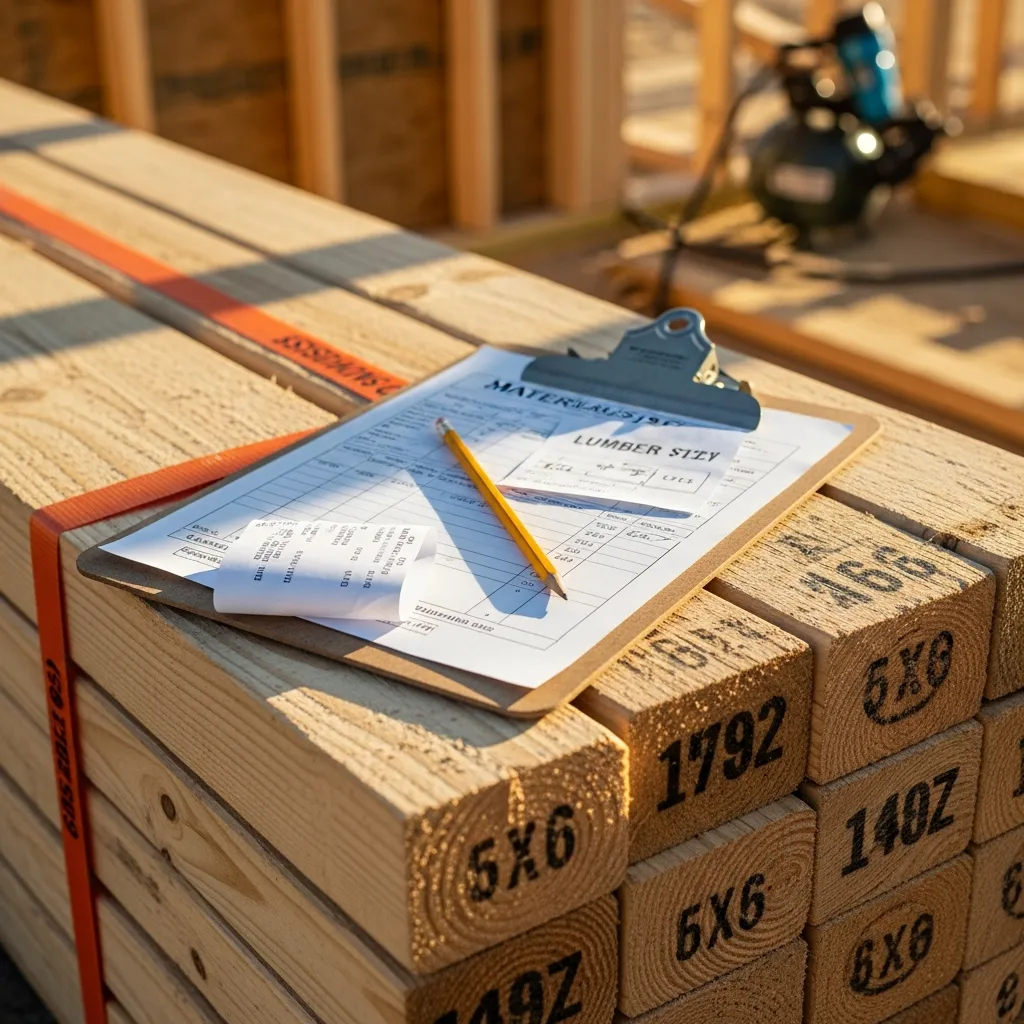
What Rising Material Costs Do to Your Profit (And How to Stop the Bleed)
Rising material costs in 2026 do not just make your jobs more expensive — they quietly destroy profit you already thought you had locked in. If you bid a job three months ago assuming $45 per sheet for plywood and you are now paying $62, that $17 difference times 200 sheets is $3,400 straight off your bottom line. On a $180K remodeling job running at a hoped-for 15% margin, that single material swing just ate 13% of your profit before you even turned a wrench.
This is not about inflation as some abstract economic concept. This is about the gap between what you estimated and what you actually pay — and whether your contracts, your bidding system, and your change order process are set up to protect you or bankrupt you one lumber run at a time.
Why Do Material Costs Keep Rising in 2026?
Material prices are being pushed up by a mix of supply chain tightness, tariffs on imported goods, and rising energy costs that ripple through everything from steel to freight. Lumber, copper, PVC, insulation — all of them have seen price jumps of 8% to 22% depending on the week and the region. For a residential remodeler in the Midwest buying materials locally, you are seeing it at the supplier counter. For a commercial GC managing 12 subs, you are seeing it buried in their invoices and change requests.
The bigger problem is not that prices are going up. It is that they are going up unevenly and unpredictably. You can lock in a price quote on Monday and have it expire by Friday. That makes estimating less like math and more like gambling — unless you build protection into every bid and every contract.
What This Means for Your Bids
If you are still bidding jobs with a single material cost number and no expiration date, you are volunteering to eat every price increase between the day you submit the bid and the day you buy the material. A $220K kitchen and bath remodel might have $75K in material cost. If prices jump 10% while you wait for permits or the homeowner to sign, that is $7,500 you are now funding out of your margin. If your margin was $33K (15%), you just lost 23% of your profit before demo day.
Here is what to do instead. Every bid should include a materials escalation clause that says something like: 'Material pricing is based on costs as of [date]. If materials are purchased more than 45 days after this date, pricing is subject to adjustment based on documented supplier invoices.' You do not need a lawyer to write this. You need one sentence that makes it clear you are not a bank for price swings you did not cause.
How Do I Protect Profit When I Have Already Signed the Contract?
If you have already signed a fixed-price contract with no escalation language, you have fewer options but you are not completely stuck. The first move is to buy your long-lead and high-volatility materials as early as possible. If you know you need 4,000 feet of PEX, 18 sheets of plywood, and six HVAC units, get them ordered and staged. Yes, it ties up cash. Yes, it takes up space. But it locks in the cost and eliminates the risk of a price spike two months into the job.
The second move is to track every material variance in real time. Set up a simple spreadsheet or use your job costing system to compare estimated cost versus actual cost by line item. When you see a category running over, you can make adjustments elsewhere — cheaper fixtures, value-engineering a detail, cutting scope on a lower-priority item. You cannot fix a budget problem in week ten that you did not see until week twelve.
The third move is to have the change order conversation early and often. If the homeowner upgrades the countertop or adds a window, that is an obvious change order. But if your contract did not include an escalation clause and lumber spiked 18% after you signed, you need to go back to the client with documentation and a clear explanation. Most reasonable clients will understand that you are not trying to gouge them — you are trying not to lose money on a job you both want to finish well.
What Should My Material Markup Actually Be in 2026?
A lot of remodelers mark up materials by 10% to 15% to cover handling, waste, and delivery. That worked fine when prices were stable. In 2026, that is not enough. You need to cover not just handling but also price risk, financing cost (because you are buying materials weeks before you get paid), and the administrative load of managing suppliers and returns.
Here is a better framework. Mark up materials by 20% to 25% as a baseline. Then add a separate line item for contingency or escalation — typically 5% to 10% of total material cost. This is not hidden profit. This is a named, explained buffer that protects both you and the client from mid-job surprises. If you do not use it, you can return it or apply it to upgrades. If you do need it, it is already in the budget and no one is surprised.
Let us say you are bidding a $140K bathroom and master suite remodel. Your material cost estimate is $48,000. You mark that up 22% ($10,560) to cover handling, waste, and your cost of money. Then you add a 7% escalation reserve ($3,360). Your total material line is $61,920. When the client asks what the escalation reserve is for, you explain it plainly: 'Material prices are moving fast right now. This line protects us both. If we do not need it, we will credit it back or put it toward an upgrade. If we do need it, we will not be coming back mid-job asking for more money.' Most clients respect that.
How Do I Actually Track Material Costs by Job?
This is where most contractors lose the game. They know materials are expensive. They know prices are up. But they do not know which job is bleeding money until the job is over and the damage is done. Tracking material costs by job is not optional anymore. It is the difference between guessing and knowing.
Set up a system where every material purchase is coded to a specific job. If you are using QuickBooks, this means turning on class or location tracking and making sure every receipt, every bill, every credit card charge gets tagged. If you are using a construction-specific system like Buildertrend or CoConstruct, make sure your purchase orders and invoices flow into job cost reports automatically. The tool does not matter as much as the habit. Every dollar spent needs a home.
Once a week, pull a job cost report for every active job. Look at your material budget versus actual spend. If you are halfway through the schedule and you have already spent 70% of the material budget, you have a problem. If you are 80% complete and you have only spent 60%, you are in good shape or you forgot to enter some receipts. Either way, you know.
This is not about becoming a spreadsheet person. This is about seeing problems while you can still fix them. If you want a deeper system for this, we built a whole process around it that you can explore at Salisbury Bookkeeping's system page.
What If My Suppliers Keep Raising Prices Mid-Job?
This is happening more in 2026 than it did two years ago. You get a quote, you build your estimate, you sign the contract, and then your supplier calls and says the price went up. Sometimes it is legitimate — their cost actually increased. Sometimes it is opportunistic. Either way, you are stuck in the middle.
First, ask for documentation. If they say the price of copper went up, ask to see the manufacturer notice or the distributor memo. Legitimate increases come with paper trails. If they cannot show you anything, push back. You might not win, but you will signal that you are not a pushover.
Second, diversify your suppliers. If you are buying everything from one lumberyard or one supply house, you have no leverage. Build relationships with two or three suppliers for each category. When one tries to raise prices mid-job, you can call the other and see if they will honor the original number. Competition works.
Third, pass documented increases through to the client as change orders. If your contract includes an escalation clause, this is straightforward. If it does not, you still have a case if you can show that the increase was unforeseeable and beyond your control. Attach the supplier email, show the math, and explain it like a human. Most clients would rather pay an extra $1,200 than have you eat the cost and cut corners to make up for it.
How Do I Know If a Job Is Still Profitable After Material Costs Spike?
Profitable means you are making money after all costs — materials, labor, subs, overhead, and your own time. A lot of contractors finish a job, look at the bank account, and think they made money because there is cash there. But if that cash is actually a deposit from the next job, or if they have not paid all the bills yet, they are fooling themselves.
Here is the simplest way to check. Add up every dollar you spent on the job: materials, labor (including your own time at a real hourly rate), subcontractors, permits, dumpster, insurance, truck costs, everything. Subtract that total from what the client paid you. What is left is your profit. If that number is less than 10% of the contract price, you did not make enough. If it is negative, you lost money even if it felt like a successful job.
Most remodelers should be targeting 15% to 20% net profit per job after all costs including owner time. If material cost spikes are dragging you below that, you need to either raise prices, tighten estimating, or stop taking jobs that are not worth it. For more on how to track this in real time, check out the article on construction cash flow management.
What Should I Do Right Now?
If you have jobs in progress, pull a job cost report today. Look at your material spend versus your estimate. If you are over budget, figure out why and what you can do about it. If you are on track, great — but check again next week.
If you are bidding new work, add an escalation clause to every proposal starting tomorrow. You do not need permission. You do not need a lawyer. You just need one sentence that protects you from price swings you did not cause.
If you are using a fixed-price contract with no protection, start buying your long-lead materials now. Lock in the cost. Yes, it ties up cash. But it eliminates risk, and risk is expensive.
And if you are not tracking costs by job, start today. It does not have to be fancy. A spreadsheet works. QuickBooks works. A notebook works. What does not work is waiting until the job is over to find out you lost money.
You are not bad at business. You are running a hard business in a volatile environment. The contractors who survive and thrive in 2026 are the ones who build systems that protect profit before it leaks away. You can be one of them.
#ConstructionCosts #ContractorProfit #RemodelingBusiness #JobCosting #ConstructionCashFlow #ContractorTips


