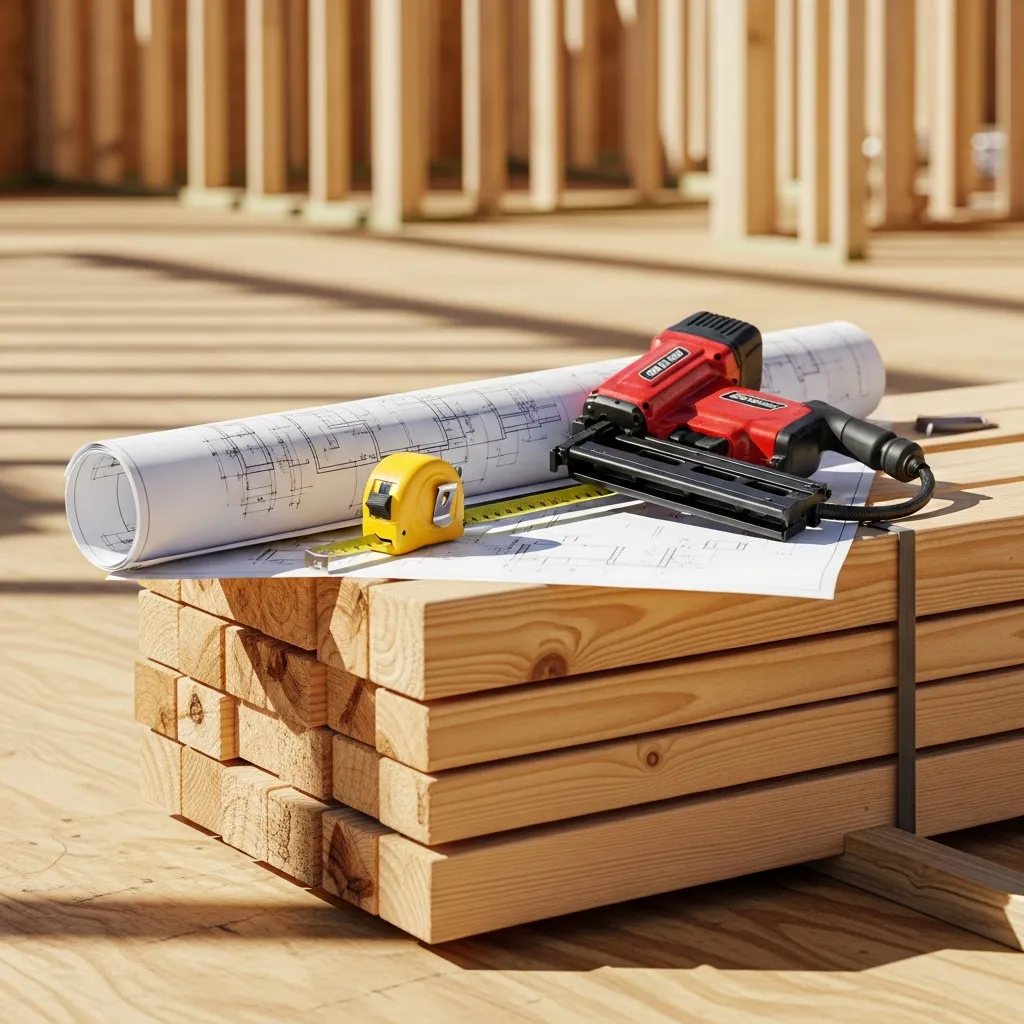
Why Lumber Prices in 2026 Mean You Need Job Costing Now
If you're watching lumber futures bounce around like a toddler on a trampoline in 2026, you already know: material cost volatility isn't going away. The real question isn't whether prices will swing—it's whether your financial system can tell you which jobs are bleeding money before it's too late. The answer for most contractors? Install real-time job costing connected to your project management software, or keep guessing until your margin evaporates.
What Does Material Price Volatility Actually Do to Your Bottom Line?
Here's the uncomfortable truth: when lumber jumps 18% in a quarter, your estimate from February is a work of fiction by May. You're sitting on signed contracts with fixed pricing, and your material costs just went rogue. If you're flying blind—tracking costs in spreadsheets, or worse, waiting until tax time to see what you made—you won't know you're underwater until the job is done and the money is gone.
For custom home builders and remodelers especially, this is a silent profit killer. You might feel busy, your crews are humming, but your bank account isn't growing. That's not bad luck. That's a job costing problem.
The Three Ways Price Swings Crush Contractors Without Systems
- Phantom Profit: You think you made 20% on that kitchen remodel, but you forgot to account for the lumber spike, the emergency Home Depot run, and the change order you never invoiced. Real margin? Maybe 8%.
- Cash Flow Whiplash: You're paying today's inflated material prices with yesterday's pricing. Your AR is 60 days out, but your suppliers want payment in 30. You're not broke—you're just always behind.
- Bad Estimating Data: If you don't know what the last three jobs actually cost, how can you price the next one? You're guessing, and in 2026's volatile market, guessing is expensive.
How Do I Know If My Job Costing Is Actually Working?
Most contractors think they have job costing because QuickBooks has a 'class' or 'project' feature. That's not job costing—that's categorization. Real job costing connects your estimate to your actuals in real time, tracks labor and material by phase, and flags variances before they become disasters.
Here's the litmus test: Can you, right now, pull up your top five active jobs and tell me which ones are over budget and by how much? If the answer is 'I think so' or 'I'd have to run some reports,' you don't have job costing. You have hope.
What a Real Financial System Looks Like for Specialty Contractors
We've built hundreds of these systems for electricians, HVAC contractors, and plumbers who were drowning in the same chaos. Here's what changes when you install a financial system that actually works:
- Field to Finance: Your project management software (Buildertrend, CoConstruct, Knowify) feeds directly into QuickBooks. No double entry. No crumpled receipts. Every cost is coded to the right job, right phase, right away.
- Live Dashboard: You get a custom KPI dashboard that shows job profitability, cash position, and WIP in one view. No digging. No guessing. Just clarity.
- Weekly Pulse: You know, every single week, which jobs are winning and which are bleeding. You can course-correct in real time—renegotiate change orders, tighten scope, or just stop the bleeding before it's fatal.
What Should I Do Differently When Material Prices Are All Over the Map?
Volatility isn't the enemy—ignorance is. When prices swing, the contractors who survive are the ones who know their numbers cold. Here's the playbook:
Build Escalation Clauses Into Every Contract: If you're signing jobs with a six-month build window in 2026, you need language that lets you adjust pricing if material costs spike beyond a set threshold. Your attorney can draft it, but you need the data to trigger it—which means you need real-time cost tracking.
Track Material Costs by Vendor and Phase: Don't just lump 'materials' into one line item. Break it down. Know what you're spending on framing lumber versus trim, on copper versus PEX. When prices move, you'll know exactly where you're exposed.
Run WIP Reports Like Your Business Depends on It (Because It Does): Work in Progress reports show you revenue earned versus costs incurred. If you're not running these monthly, you're managing by gut feel. WIP reporting is the difference between knowing you're profitable and hoping you're profitable.
The Emotional Win: Sleeping Through the Night Again
Here's what we hear most from contractors after they get their financial system dialed in: 'I didn't realize how much energy I was spending worrying.' You're not wondering if you can make payroll. You're not lying awake doing mental math on job margins. You know—precisely, confidently—where you stand. That's not a luxury. That's the foundation of a business that scales.
Why Does This Matter More in 2026 Than Ever Before?
Because the margin for error is gone. Labor is tight and expensive. Materials are volatile. Your customers are price-sensitive and comparison-shopping. The contractors who win in this environment are the ones who operate with surgical precision—who know their costs, price with confidence, and protect their margins like a hawk.
The ones who lose? They're the ones still running their business out of a shoebox, hoping it all works out. Hope is not a financial strategy.
If you're tired of feeling like you're working harder but not getting ahead, the problem isn't your hustle—it's your system. You need a financial backbone that connects your field operations to your bank account and gives you the visibility to make smart, fast decisions. That's not a nice-to-have anymore. In 2026, it's survival.
We've got your back. Let's build a system that turns chaos into control, and stress into clarity. Because you didn't get into this business to be an accountant—you got into it to build things. Let us handle the numbers so you can get back to what you do best.
#JobCosting #ConstructionFinance #FinancialClarity #ContractorCFO #ConstructionBookkeeping #MaterialCostManagement


