

WIP Reporting: How Contractors Prevent Profit Fade
Profit fade represents one of construction's most costly problems. Projects appearing profitable early suddenly finish with minimal or negative margins. This occurs because contractors typically depend on month-end reporting, outdated spreadsheets, or inconsistent job costing that obscures actual project performance until completion.
WIP reporting (Work In Progress) serves as the solution—a powerful lever for protecting margins, stabilizing cash flow, and maintaining project control.
What WIP Reporting Really Shows
WIP reporting delivers real-time snapshots of each job's health, tracking:
- Percent complete
- Costs incurred to date
- Projected final cost
- Earned revenue
- Overbilling and underbilling
- Profit-to-date and projected profit at completion
Rather than relying on intuition or hidden spreadsheets, WIP reporting reveals the truth about every job weekly.
Why Contractors Experience Profit Fade
Profit fade follows predictable patterns:
- Labor is mis-coded or over budget — Untracked or incorrectly coded hours prevent managers from recognizing overruns until project completion.
- Subcontractors exceed estimates — Subs often bill beyond expectations due to delays, scope changes, or poor coordination.
- Material costs spike mid-project — Price fluctuations, backorders forcing substitutions, and untracked field purchases erode margins.
- Change orders are not captured or billed — Unbilled change orders represent one of the fastest profit-killers.
- Projects fall behind schedule — Delays cost money, particularly when labor or equipment sits idle.
- Financials are updated too late — When accounting doesn't sync with operations, profitability becomes guesswork.
The Percent-Complete Method Explained
The percent-complete method forms WIP reporting's foundation by comparing actual cost against budgeted cost to determine true project progress.
Formula: Percent Complete = Actual Costs / Budgeted Costs
This calculation enables contractors to determine earned revenue, overbilling or underbilling, and true profit-to-date.
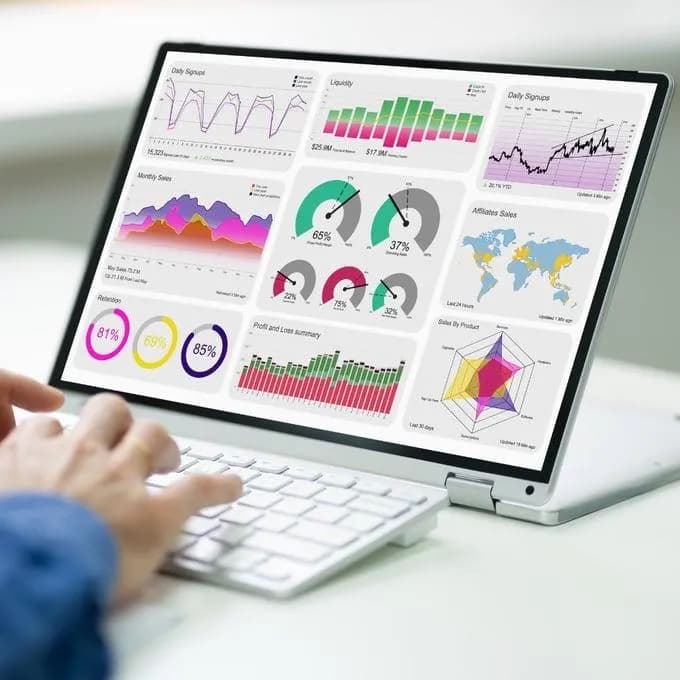
Dashboards Beat Spreadsheets Every Time
Spreadsheet WIP reports fail for three reasons:
- They aren't updated daily
- They rely on manual data entry
- They don't tie directly into QBO or job costing
Real-time WIP dashboards solve all three: update automatically, reflect cash flow, labor, and materials in real time, display job profitability instantly, flag issues early, and connect directly to Projects in QBO.
Real-World Wins From Better WIP Visibility
Contractors adopting WIP reporting typically achieve:
- Higher profit margins (5-15% improvement)
- Reduced labor overruns
- Cleaner AR and faster collections
- Better scheduling decisions
- More accurate bidding on new projects
- Less stress and fewer surprises
Conclusion
WIP reporting is mandatory for contractors wanting to scale. It represents the single most important financial tool for protecting margins, spotting problems early, and maintaining project control.
Book a free 30-minute call.
You walk away with a list of leaks in your books. Free. No pitch.
Book a free call