
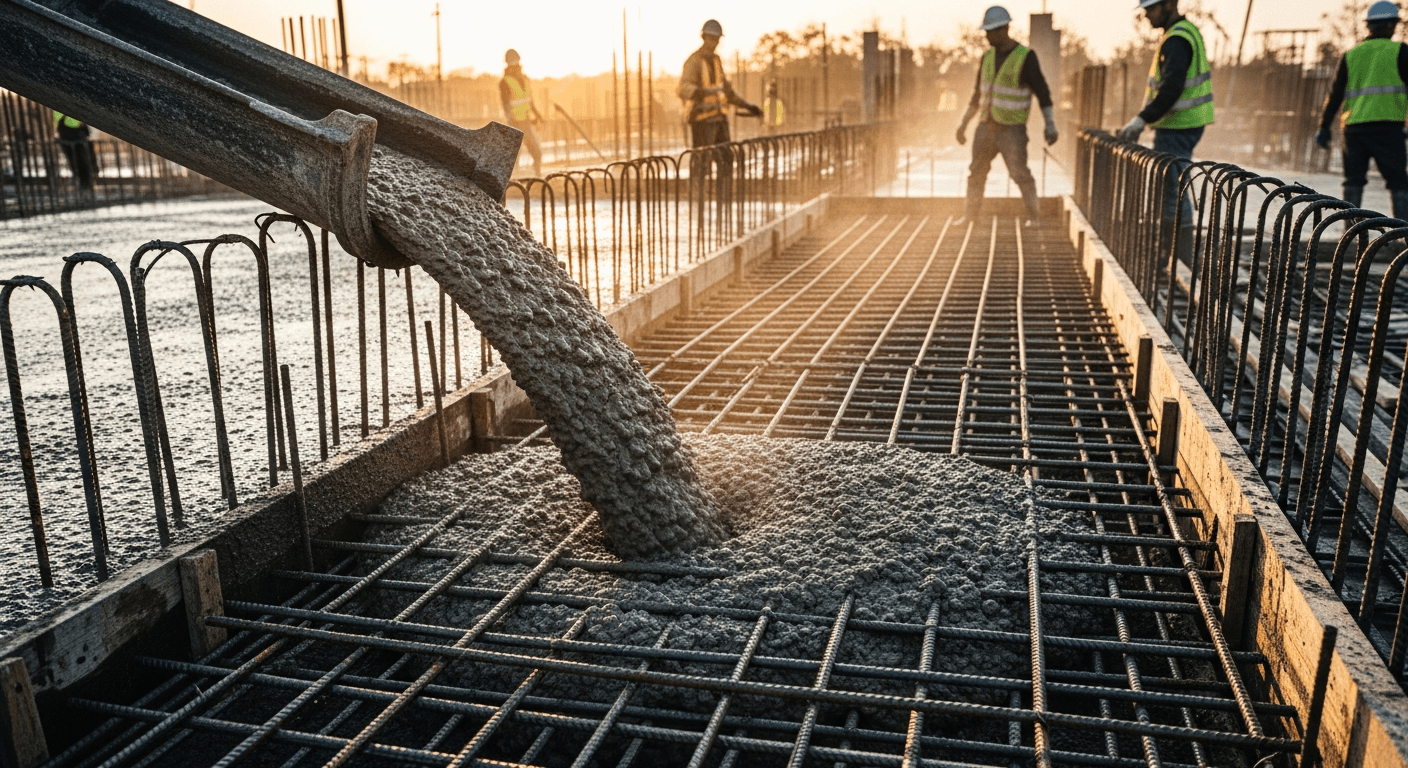

Cash flow issues in construction drain $40,000+ annually from contractors who can't see the gaps coming. This 90-day working capital plan gives you the exact framework to handle retainage delays, optimize WIP schedules, and maintain steady liquidity without panic borrowing.
Why construction cash flow breaks down faster than other industries
Construction cash flow operates on a completely different timeline than retail or service businesses. You pay for materials upfront, carry labor costs for weeks, and wait 30-90 days for payment after completion. Meanwhile, your subs are breathing down your neck for their draws.
According to Siteline's State of Subcontractor Billing in 2025 report, subcontractors wait an average of 96 days to be paid after invoicing. That's over three months of carrying costs that ripple through every level of a project.
The math gets brutal fast. Net profit margins for general contractors average just 5-6% in 2025 according to Aladdin Bookkeeping. A single cash flow miscalculation can wipe out the profit from an entire quarter.
The 90-day working capital framework that stops the bleeding
Working capital for construction isn't just cash in the bank. It's your ability to bridge the gap between paying costs and collecting revenue across multiple overlapping projects.
The 90-day framework breaks into three 30-day cycles, each with specific cash management rules:
- Days 1-30: Active job funding and immediate payroll coverage
- Days 31-60: Retainage collection buffer and material purchase cushion
- Days 61-90: Emergency reserve for delayed payments or change orders
Your baseline working capital requirement is 45-60 days of operating expenses. For a $5M annual revenue contractor, that typically means $200,000-$300,000 in readily available funds.
| Annual Revenue | Monthly Operating Cost | 90-Day Working Capital Need |
|---|---|---|
| $1M | $65,000 | $195,000 |
| $3M | $180,000 | $540,000 |
| $5M | $275,000 | $825,000 |
| $10M | $500,000 | $1,500,000 |
How to calculate working capital needs for construction projects
Construction working capital isn't a static number. It fluctuates based on your project mix, payment terms, and seasonal patterns.
Start with your baseline monthly burn rate:
- Fixed overhead (rent, insurance, base salaries, equipment payments)
- Variable project costs (materials, subcontractor draws, field labor)
- Owner distributions and debt service
Then add project-specific factors:
- Retainage percentages held by your clients
- Average collection period for completed work
- Material purchase timing vs. delivery schedules
- Subcontractor payment terms and early-pay discounts
The key insight: gross profit margins for general contractors hit 12-16% in 2025 according to Aladdin Bookkeeping, but that margin gets tied up in receivables for months. Your working capital needs to bridge that gap without borrowing against future profits.
Retainage billing strategy that keeps cash moving
Retainage is where cash flow goes to die. Most contractors treat it as "bonus money" that shows up eventually. That's backwards thinking that creates artificial scarcity.
Build retainage management into your billing cycle from day one. Every contract should specify retainage release schedules tied to completion milestones, not final occupancy.
Standard retainage percentages by project type:
- Residential custom homes: 5-10%
- Commercial tenant improvements: 5-10%
- Municipal projects: 10-15%
- Heavy civil work: 10-20%
The contractors who treat retainage as working capital — not bonus money — stop running out of cash mid-project.
Your retainage release strategy should match your cash needs, not the client's convenience. Negotiate milestone releases at 50% completion, substantial completion, and 30 days after final occupancy. Never accept "when we get paid" clauses from general contractors or developers.
WIP schedules that actually predict cash needs
Work-in-progress (WIP) schedules are supposed to show you where every project stands financially. But most contractors use them as historical reports instead of cash flow prediction tools.
A properly built WIP schedule shows you three critical numbers for each active job:
- Earned revenue to date — what you can bill right now
- Costs incurred vs. budget — whether you're over/under on expenses
- Billings vs. costs — your cash position on this specific job
The BuilderCFO dashboard shows these three metrics in real-time, so you can spot cash crunches 30-45 days before they hit your bank account.
Run WIP reports weekly during active construction phases. Monthly WIPs are historical documents that tell you where the cash went, not where it's going.
When to factor accounts receivable into cash flow projections
Accounts receivable in construction isn't like other industries. Your A/R includes completed work (should convert to cash in 30 days), retainage (might convert in 6-12 months), and change orders (could convert never if not properly documented).
Age your receivables by category and probability:
| A/R Category | 0-30 Days | 31-60 Days | 61-90 Days | 90+ Days |
|---|---|---|---|---|
| Completed billings | 95% | 85% | 70% | 40% |
| Progress billings | 90% | 80% | 65% | 35% |
| Retainage | 10% | 15% | 25% | 60% |
| Change orders | 60% | 40% | 25% | 15% |
Never count receivables over 90 days as available working capital. That money is tied up in disputes, slow-pay clients, or documentation problems.
The Salisbury Bookkeeping team tracks A/R aging weekly for our construction clients because cash flow projections fall apart when you assume all receivables convert on schedule.
Material cost increases and working capital pressure in 2026
Construction material costs are putting unprecedented pressure on working capital in 2026. According to Construction Cost Accounting, contractors face projected increases of 25-50% for copper, 15-35% for steel due to tariffs, and 20-40% for lumber due to supply constraints.
These increases force working capital decisions most contractors haven't faced before:
- Buy materials early and carry inventory costs vs. face higher prices later
- Lock in pricing with suppliers vs. maintain cash flexibility
- Pass increases to clients mid-project vs. absorb cost overruns
Associated General Contractors reports that 70% of construction firms are affected by tariffs in 2026, creating supply chain uncertainty that demands larger cash reserves.
Emergency cash sources for construction downturns
Even perfect cash flow management can't prevent every crisis. Client bankruptcies, delayed permits, and weather disasters still happen. Your 90-day plan needs emergency funding sources you can access without compromising ongoing projects.
Construction-friendly emergency funding sources, ranked by speed:
- Equipment credit lines — 2-5 business days, secured by machinery
- Invoice factoring — 1-3 business days, 2-5% of invoice value
- SBA working capital loans — 2-6 weeks, lowest interest rates
- Merchant cash advances — same day, highest cost (15-40% effective rate)
Set up these relationships before you need them. Applying for emergency funding during a cash crunch limits your options and increases costs.
Technology that prevents cash flow blindness
Most construction cash flow problems stem from information lag. You find out about the problem weeks after it started, when your options are limited to expensive emergency measures.
Construction-specific tools that provide early warning:
- Real-time job costing that updates daily, not monthly
- Automated A/R aging and collection reminders
- 13-week rolling cash flow forecasts that include all projects
- Retainage tracking by project and release schedule
The construction teams we work with through Salisbury Bookkeeping's fractional CFO service get weekly cash flow reports that flag problems 30-45 days early, when solutions are still affordable.
Cash flow problems that take you by surprise were visible six weeks earlier. The question is whether your systems showed you the early warning signs.
What to do next
Your next 90 days start with accurate baseline data. You can't manage cash flow with outdated information or gut feelings about project status.
- Calculate your true monthly burn rate — fixed overhead plus average variable costs for the last 12 months
- Age your current A/R — separate completed work, retainage, and change orders by collection probability
- Build a 13-week rolling cash forecast — include all known project milestones and payment dates
- Set up weekly WIP reporting — track earned revenue vs. billings vs. costs for every active job
- Establish emergency credit facilities now — don't wait for a crisis to explore your options
Need this handled by someone who does it every day?
Salisbury Bookkeeping is the construction-only bookkeeping + fractional CFO firm that contractors trust to get their books, WIP schedules, and job margins right. And BuilderCFO — our dashboard — gives you real-time job cost visibility, 13-week cash forecasting, and a margin-by-job view in one screen.
See how Salisbury Bookkeeping helps contractors like you → · Try BuilderCFO →
Frequently Asked Questions
- How much working capital should a construction company maintain?
- Construction companies should maintain 45-60 days of operating expenses as working capital, typically $200,000-$300,000 for a $5M annual revenue contractor. This covers the gap between paying costs and collecting revenue across overlapping projects.
- What percentage of retainage should be held for commercial jobs?
- Commercial projects typically hold 5-10% retainage, though municipal projects can reach 10-15% and heavy civil work may hold 10-20%. Negotiate milestone releases at 50% completion, substantial completion, and 30 days after final occupancy.
- How long do subcontractors typically wait to be paid?
- According to Siteline's 2025 report, subcontractors wait an average of 96 days to be paid after invoicing. This creates cascading cash flow pressure throughout the supply chain.
- When should contractors factor accounts receivable into cash flow projections?
- Only factor A/R under 90 days into cash flow projections. Age receivables by category: completed billings (95% collectible 0-30 days), progress billings (90% collectible 0-30 days), and retainage (only 10% collectible 0-30 days).
- What are the best emergency funding sources for construction companies?
- Equipment credit lines (2-5 days), invoice factoring (1-3 days), SBA working capital loans (2-6 weeks), and merchant cash advances (same day but expensive at 15-40% effective rates). Set up relationships before you need them.
- How do material cost increases affect working capital needs in 2026?
- Construction Cost Accounting projects 25-50% copper increases, 15-35% steel increases from tariffs, and 20-40% lumber increases. These force difficult decisions about early material purchases vs. maintaining cash flexibility.
- What's the difference between gross and net profit margins in construction?
- General contractors average 12-16% gross profit margins but only 5-6% net profit margins in 2025. The difference gets tied up in receivables for months, making working capital critical to bridge the gap.
- How often should construction companies run WIP reports?
- Run WIP reports weekly during active construction phases. Monthly WIPs are historical documents that show where cash went, not where it's going. Weekly reports help spot cash crunches 30-45 days early.
Book a free 30-minute call.
You walk away with a list of leaks in your books. Free. No pitch.
Book a free call